The Gift of Boredom | How Stillness Unlocks Creativity and Self-Discovery
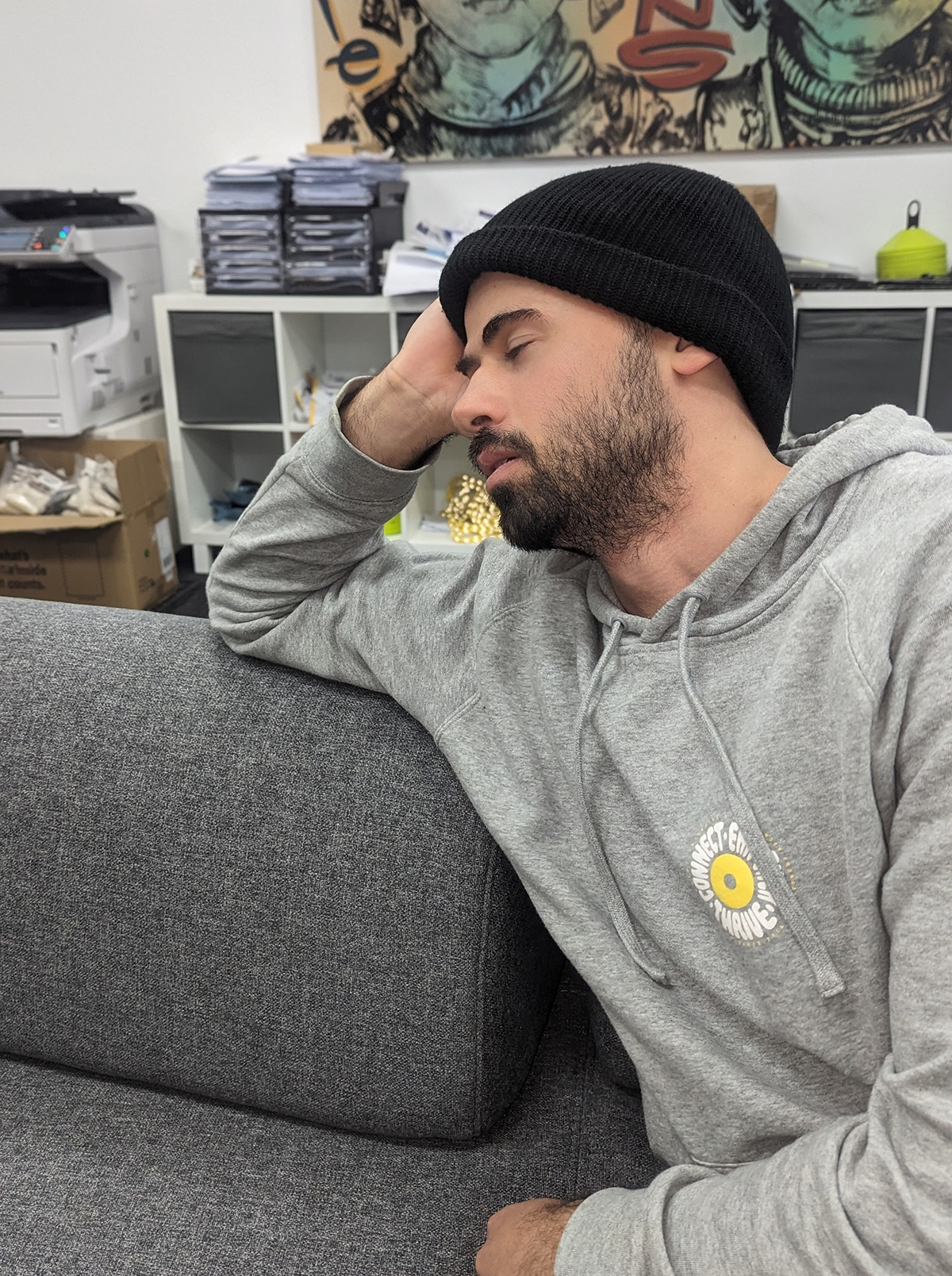
Boredom gets a bad rap.
From an early age, we’re taught to avoid it, to fill every quiet moment with noise, distraction, or activity. But what if we’ve misunderstood boredom entirely? What if, instead of something to escape, boredom is something to embrace?
At LifeChanger, we believe growth begins in the spaces between. When we pause, when we disconnect, when we sit quietly with ourselves—these are the moments where transformation often begins. Boredom, uncomfortable as it may feel, is one of those spaces. It’s not an enemy of creativity or self-awareness—it’s the doorway to both.

No Room for Boredom
We live in an age of constant stimulation. From smartphones to streaming platforms, our attention is under siege - targeted by industries spending millions to capture just a few extra seconds of our focus. But when young people learn to slow down and reflect, they often begin to better understand themselves—something supported through self-discovery and identity tools like the Hero Quiz , which help build awareness of strengths, values and purpose.We fill downtime reflexively, often without thinking. Waiting in line? Scroll. Riding the train? Stream. Sitting alone? Swipe.
But this non-stop engagement comes at a cost. It prevents the mind from wandering—one of the essential processes for original thought and self-reflection. It interrupts our ability to sit with discomfort, to process emotions, or to hear the quiet signals within that ask: Is this the life I want to live? Am I being true to myself?
As Steve Jobs put it, “Boredom allows one to indulge in curiosity, and out of curiosity comes everything”.

Boredom and the Creative Brain – The Science
When we’re bored, our brain switches into what neuroscientists call the “default mode network” (DMN)—a state associated with mind-wandering, daydreaming, and connecting the dots in unexpected ways.
It’s in this state that we make creative leaps, generate fresh ideas, and imagine new possibilities.
Studies have shown that people who engage in monotonous or repetitive tasks—like folding laundry or mindlessly organising files—tend to perform better on creativity tests afterwards. The deeper the boredom, the more creative the breakthrough.
It turns out, creativity doesn’t just need stimulation. It also needs space. It needs silence. It needs the kind of mental openness that only boredom can provide.
Boredom as a Mirror for Self-Reflection
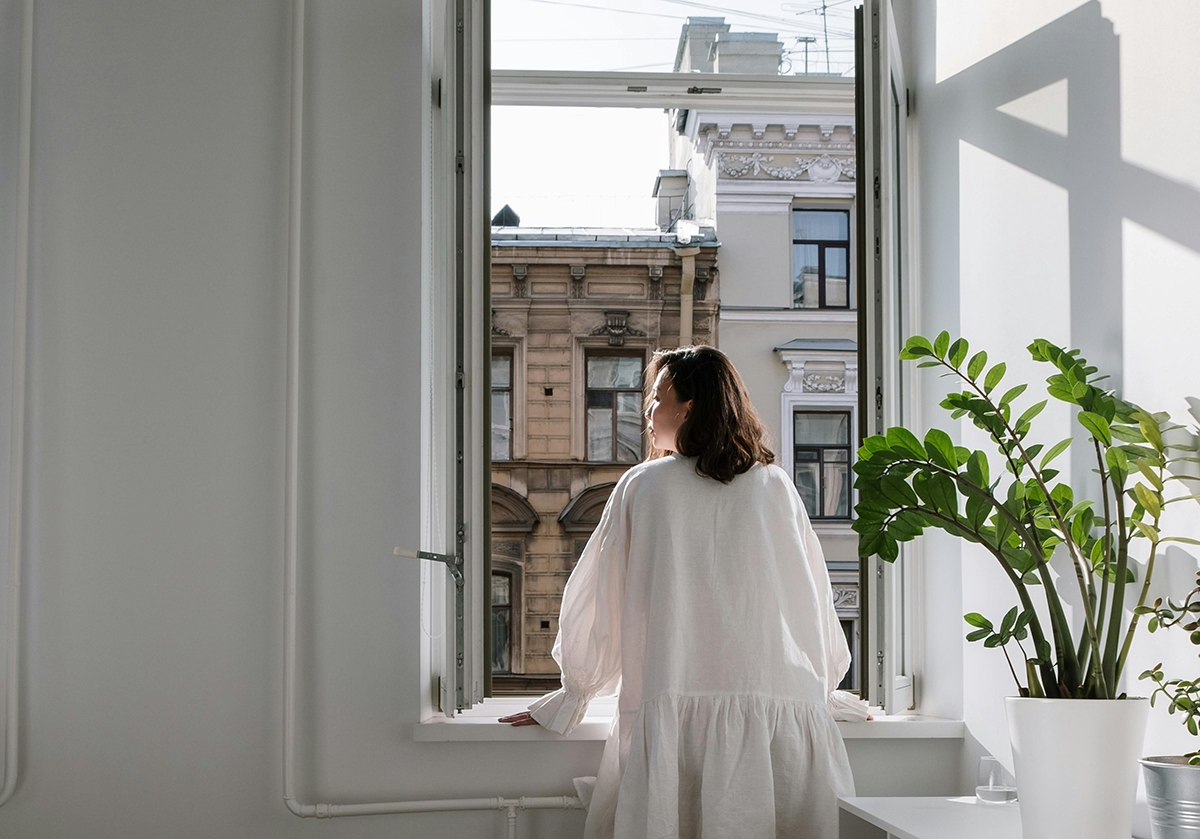
Beyond creativity, boredom holds another gift: the opportunity for self-discovery.
At LifeChanger, this is reinforced through wellbeing programs that help young people build self-awareness, emotional literacy and resilience, giving them tools to better understand their thoughts, feelings and identity.
When we’re constantly stimulated, we rarely sit with our own thoughts. But when we allow boredom in, we create the space to ask deeper questions: What do I care about? What matters to me? Where do I want to go next?

Practising Intentional Boredom
So, how do we bring boredom back—intentionally?
It starts with setting boundaries around distraction. Turn off notifications. Take device-free walks. Schedule quiet time. Let your mind wander.
These practices align closely with LifeChanger’s broader approach to mental fitness and resilience-building, where reflection and emotional regulation are key foundations for wellbeing.
These days it feels like the world is telling us to go faster, watch more, read more, learn, record, note down, reply, swipe, scroll and click - being bored gets us to slow down. In a culture obsessed with doing, it invites us to simply be.
What if boredom wasn’t something to avoid, but a powerful moment to lean into?
What if, by embracing boredom, we gave ourselves the time and space to create, to reflect, to heal—and to grow?
At LifeChanger, we believe the answers are already within us. Sometimes, all we need is the stillness to hear them.